
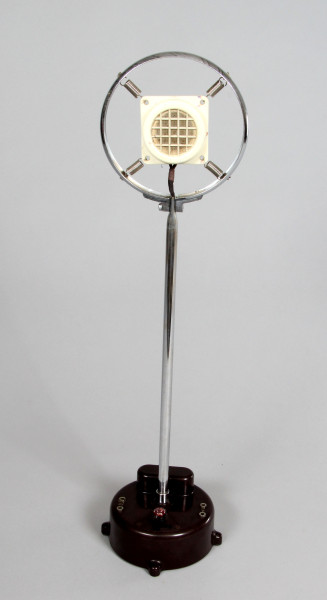
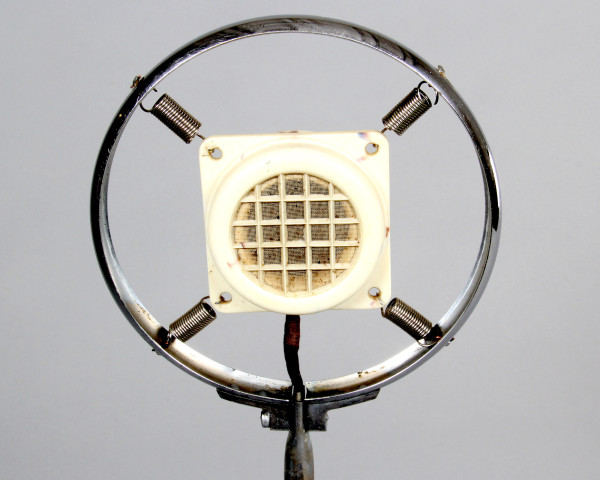
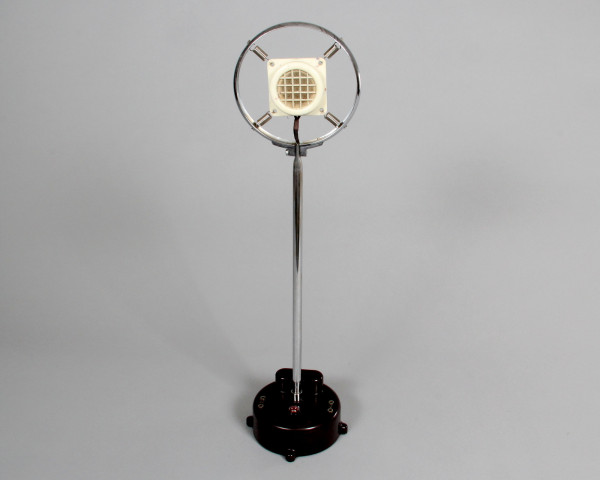
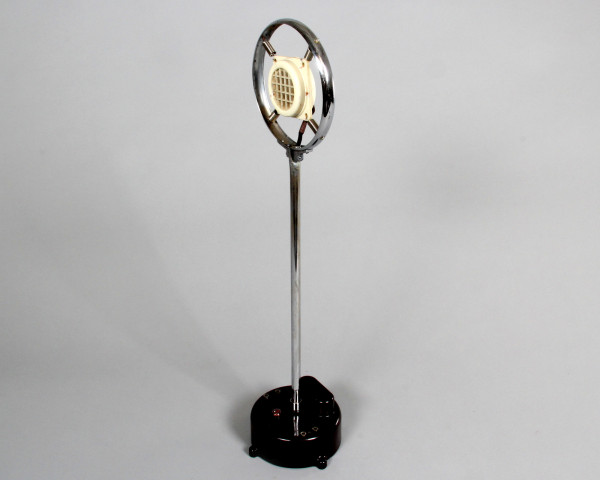
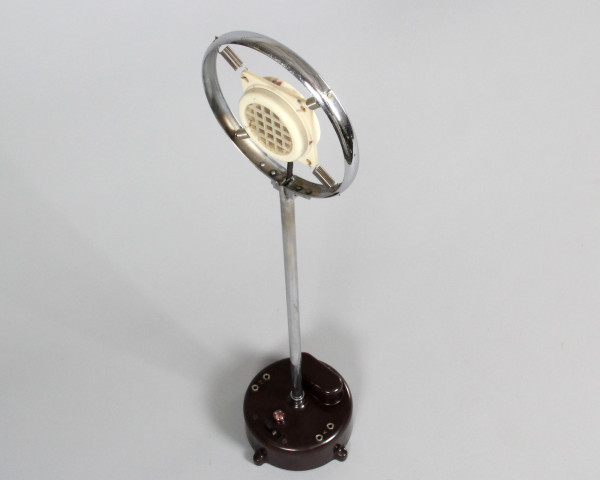
Stand-mounted carbon microphones manufactured in Germany during the 1930s were a key technology for broadcasting and telecommunication of the era. These microphones employed carbon granules to capture sound, where air pressure changes caused by sound waves altered the carbon's resistance, generating an electrical signal.
They were popular for their simplicity, reliability, and relatively low production costs. The microphones had a robust metal construction and were mounted on stable stands. Their design reflected the functionalist and industrial trends of the time.
Despite their limited sound transmission quality, they became a standard in many studios and institutions. Today, they are highly sought after by collectors of radio technology as historical technical artifacts.