
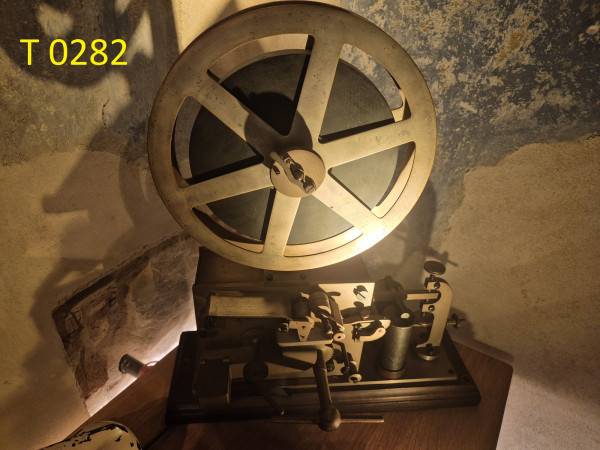
This device is a telegraph. Ever wondered how a telegraph actually worked? Think of it as the great-grandfather of today’s text messages.
Instead of a keyboard and phone, the telegraph operator used a small metal lever called a “telegraph key.” By pressing it, they would send an electrical signal down a wire—much like clicking a mouse button to send a message.
But there were no letters involved. Instead, Morse code was used:
A short press meant a dot
A long press meant a dash
Words were built from these dots and dashes. For example, the word HELLO in Morse code looks like: .... . .-.. .-.. --- (four dots, space, dot, space, dot-dash-dot-dot…)
Somewhere far away—maybe even on the other side of Europe—another person would be listening to the taps, or reading them directly from a tape the machine printed. They’d decode the dots and dashes back into letters, turning the signal into a proper message.
So the whole conversation traveled from button taps… right back into words.