
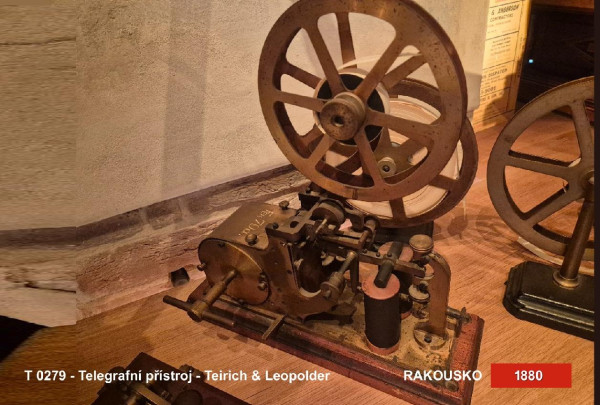
The postal telegraph is a device from an era when the speed of communication was beginning to outpace horses and steam locomotives. Likely produced around 1900, it comes from the workshop of the Vienna-based company Teirich & Leopolder, a manufacturer specializing in precision electromechanical equipment for the postal and railway administrations of the Austro-Hungarian Empire. This telegraph machine was designed to receive and record Morse code—either by engraving it onto a paper tape or marking it with ink. At the heart of the device is an electromagnetic system with a mechanical inscription mechanism: the coil responded to electrical impulses sent from a remote station, which—via levers and gears—physically imprinted the message. The code was deciphered manually; the operator read the dots and dashes and transcribed them into everyday language. At the time, it was a profession imbued with both prestige and responsibility.