
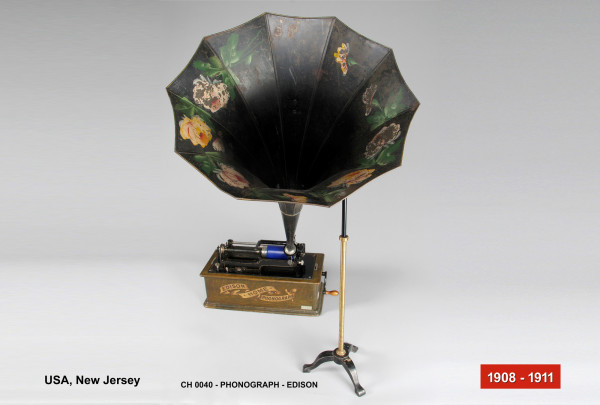
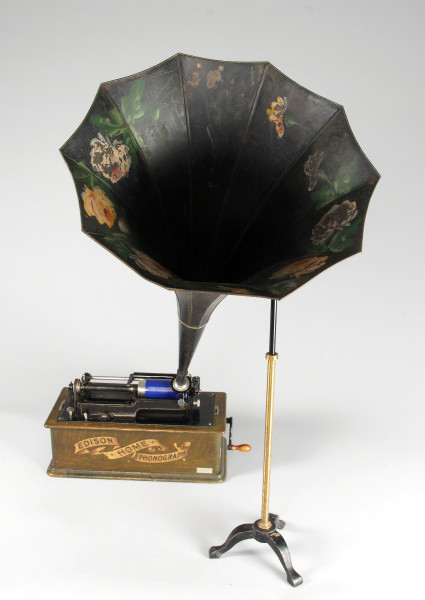
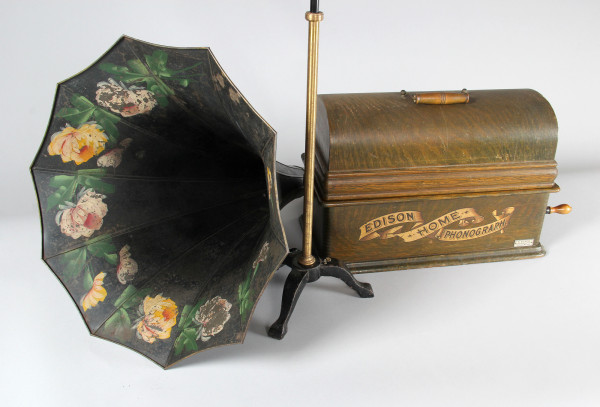
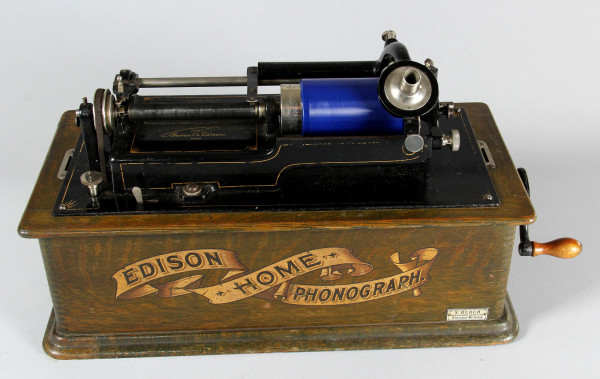
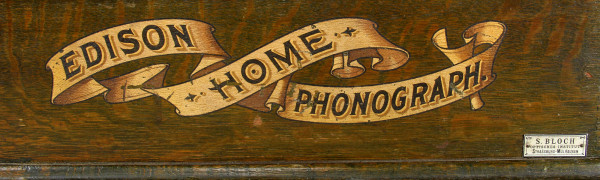
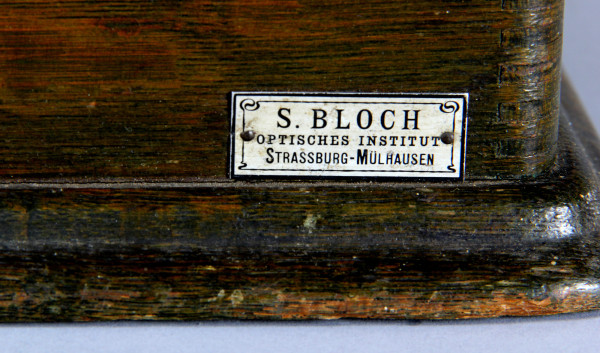
The Edison Model D phonograph was an improved version of its predecessors, introducing a groundbreaking innovation: it was the first home phonograph designed to play both standard two-minute cylinders and the new four-minute cylinders (at 160 RPM). This was made possible by the duplex soundbox (Model O), which featured a switching mechanism and interchangeable needles for both cylinder types.
The phonograph had a sturdy oak cabinet with a classic lid and was powered by a stronger spring-driven motor, wound with a key.
However, another major advancement arrived in 1912—the blue Amberol cylinders, which were far more durable than their wax predecessors.