
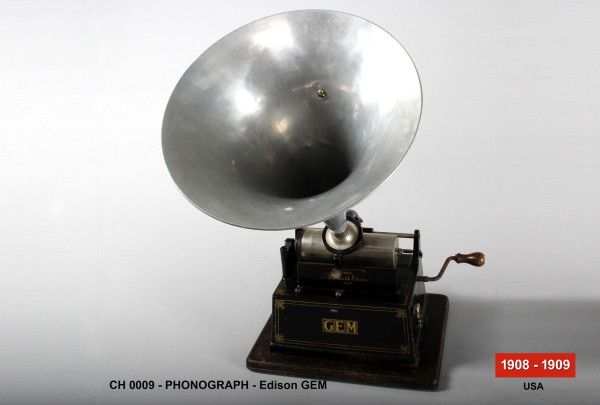
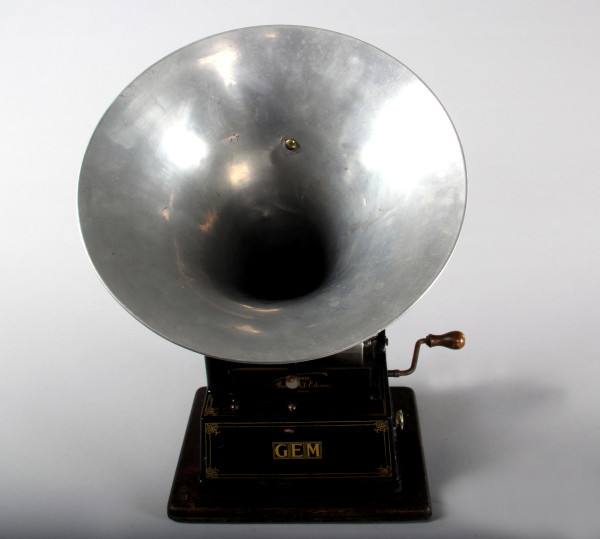
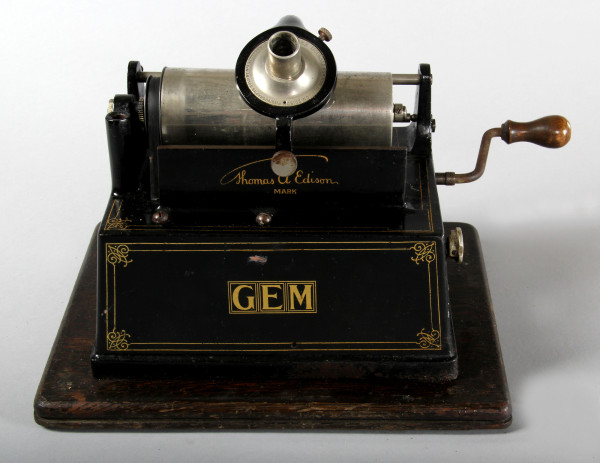
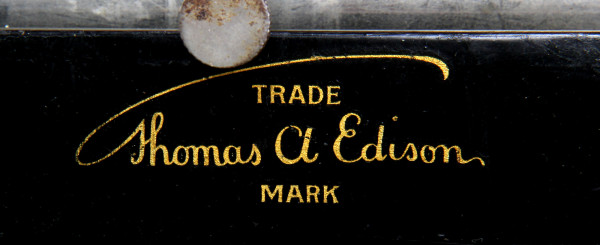
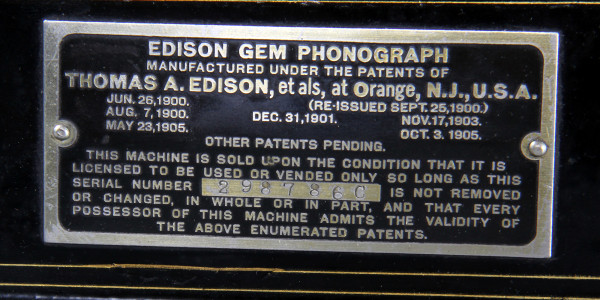
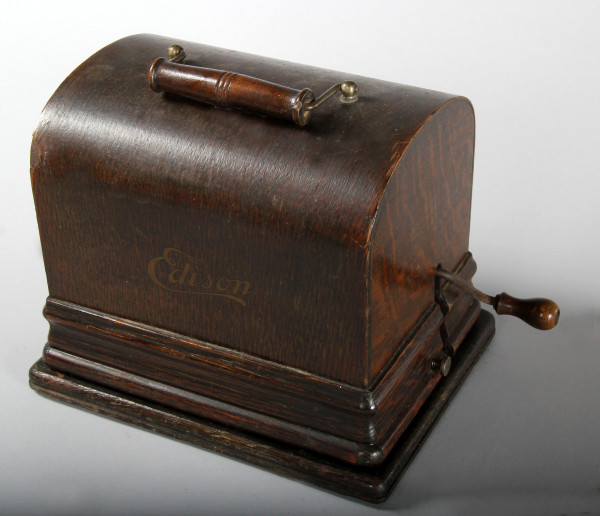
The Edison Gem was one of Thomas Edison’s smallest phonographs, introduced to the market in 1899. This compact device, housed in a metal chassis, was designed for fast and mass production, making phonographs significantly more affordable and allowing a much wider audience to enjoy recorded music and voice.
Edison’s approach to invention was methodical—within his Menlo Park laboratories, he tested hundreds of materials to achieve near-perfect sound reproduction. The Gem initially used wax cylinders, but during the first decade of the 20th century, Edison developed the more durable blue Amberol cylinders, which doubled the recording length to four minutes. These became the pinnacle of sound recording technology—until they were abruptly replaced by gramophone records, practically overnight.