
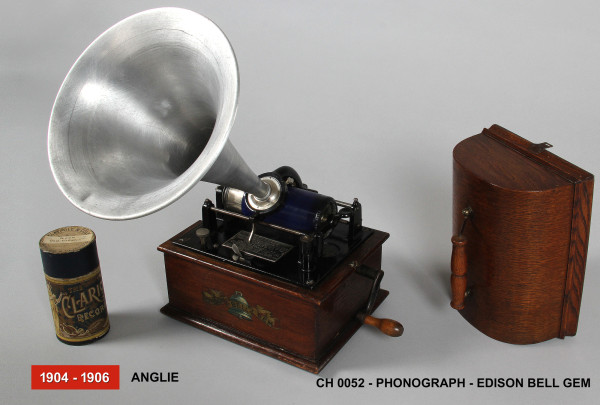
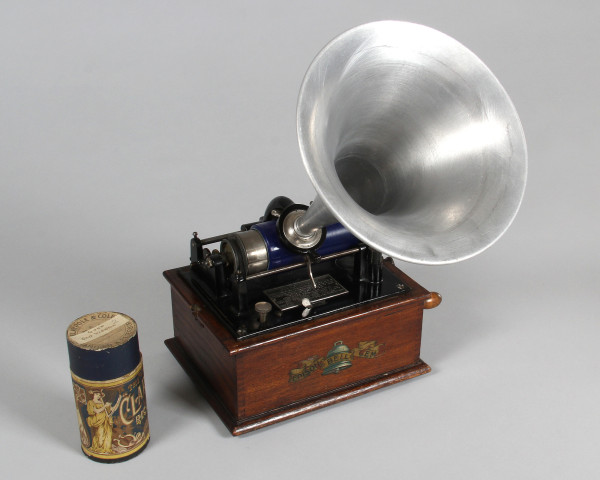
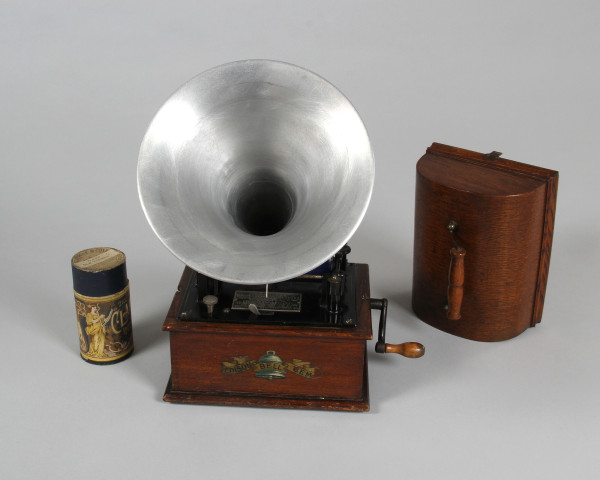
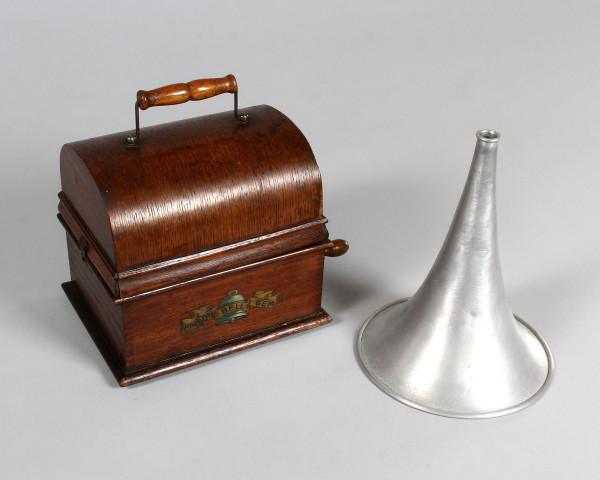
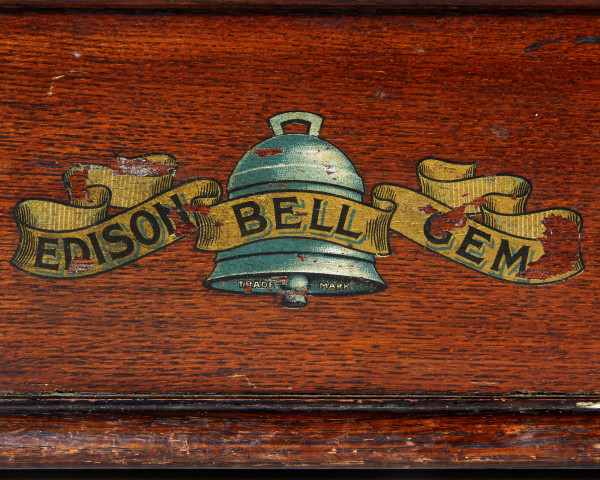
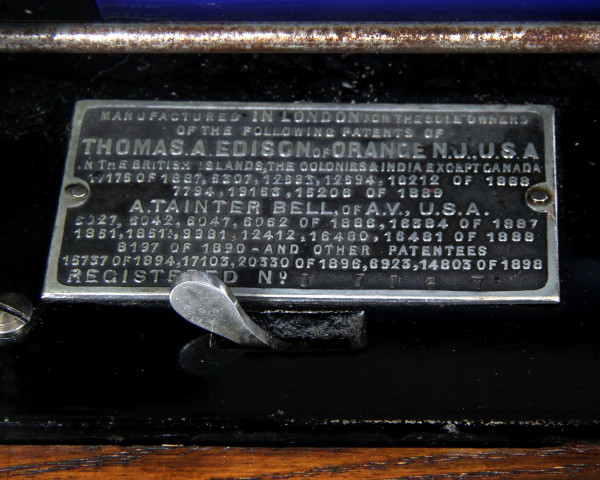
The Edison Bell GEM was one of the smallest and most affordable phonographs of its time. It was produced by the British company Edison Bell, which held a license to manufacture phonographs in Europe. This model was designed primarily for households that couldn’t afford larger and more expensive devices like the classic Edison phonographs.
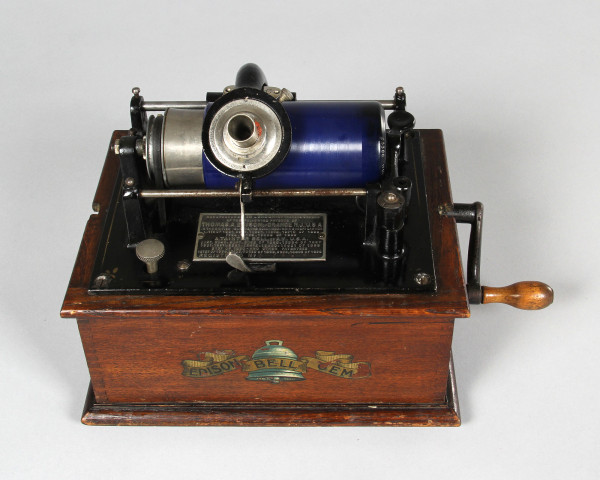
Despite its simplicity, the GEM had a rather elegant design. It commonly featured a cast iron base, though some versions had a wooden casing. It had a small tonearm and a distinctive crank for winding.
The GEM used standard two-minute wax cylinders (the blue Amberol cylinders would not be developed until 1908), and its spring-driven motor could play approximately one cylinder per wind. Due to its compact size—especially its small horn—it had limited volume and sound quality.
Yet, despite its modest nature, the Edison Bell GEM played a key role in popularizing phonographs across Europe, bringing recorded sound into many households.