
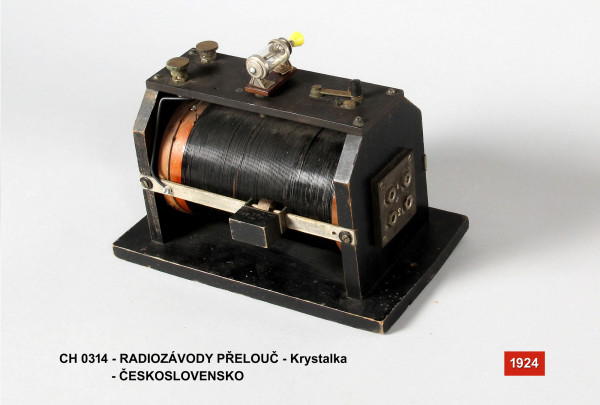
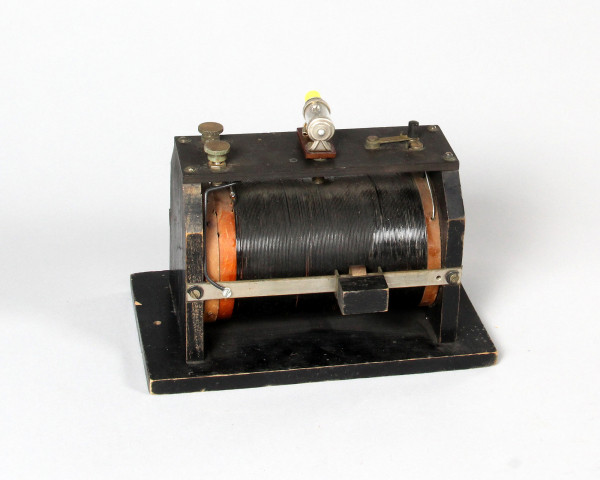
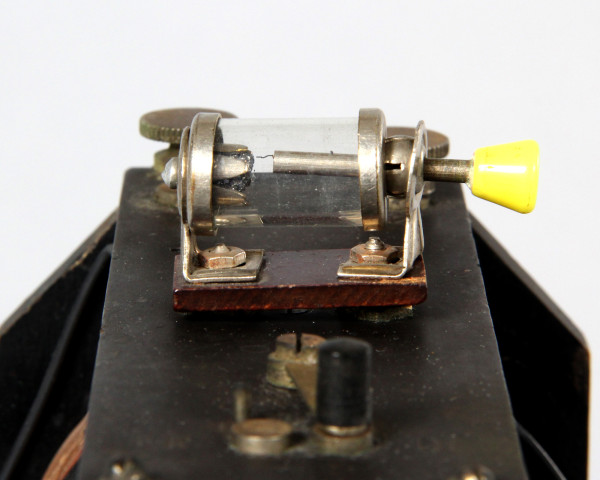
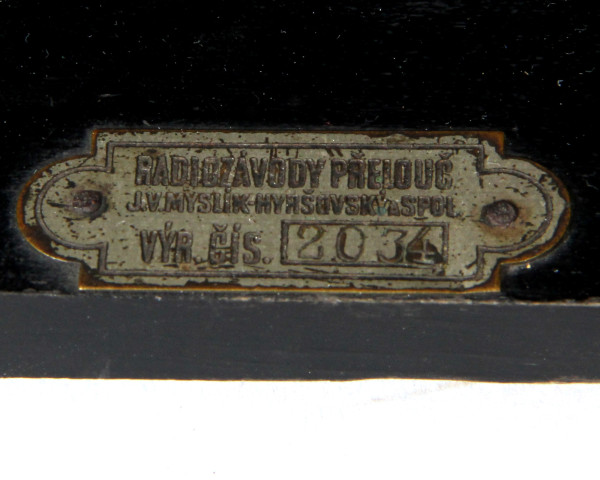
In 1924, Ant. Liedermann crafted his first two-slider crystal radio, a remarkable device for its time. With a frequency range of 300–2100 meters, it was available with either an open or enclosed detector.
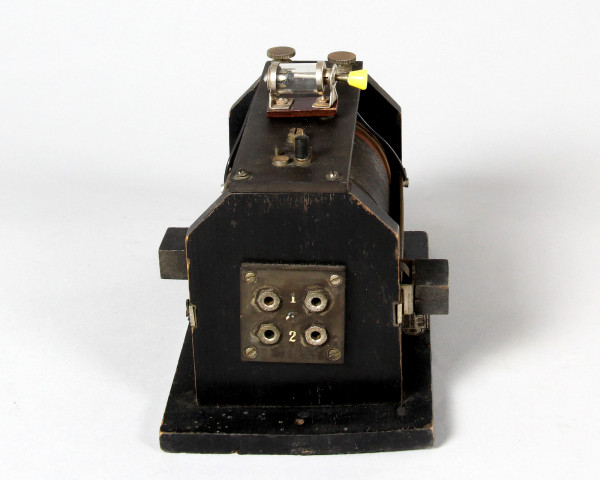
The radio's base and sides were made of wood, while the top was elegantly finished in ebonite. The upper section featured two sockets for the detector, a switch, and two screws for connecting the antenna and ground. On the side panel, there were four additional sockets designed for high-impedance headphones.
This particular device proudly carries the serial number 2034, preserving a piece of history from an era of pioneering innovation in radio technology.