
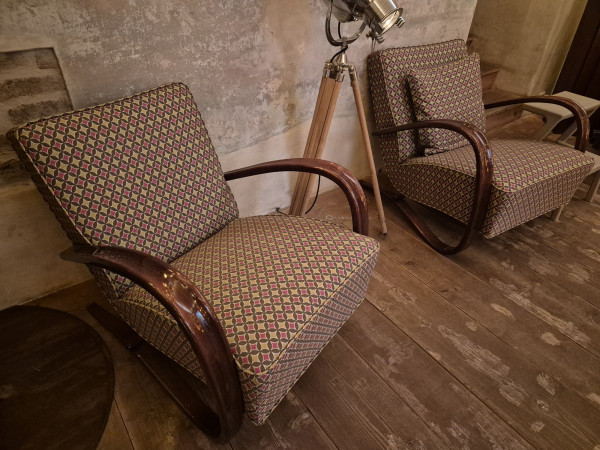
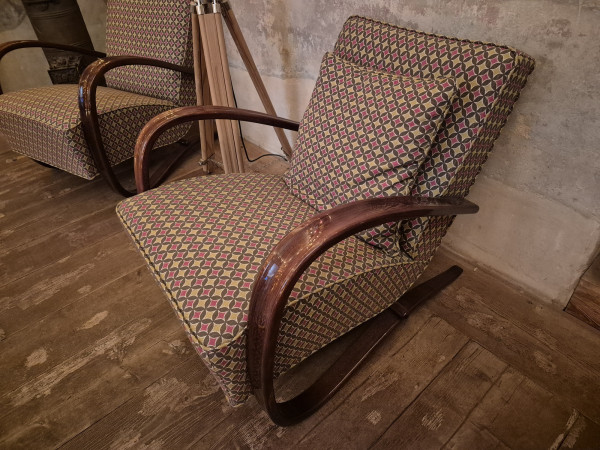
The H269 armchair by Jindřich Halabala is one of those that left a distinct mark on the history of Czech design. It is like a ballet movement rendered in wood—graceful, dynamic, and yet strong. Designed in the 1930s for the United Arts and Crafts Works (UP Závody) in Brno, it became a symbol of interwar modernism and later of postwar comfort.
Its iconic silhouette and characteristic bent armrests made of beech wood form a flowing arch that extends all the way to the base. This shape isn’t merely aesthetic—it functions as a cantilever that supports weight without back legs. The result is an elegant yet stable construction that appears light, even though it is as solid as a bridge arch.
Today, it ranks among the most sought-after design pieces of the First Republic and the Art Deco period. This legendary model from the 1930s to 1950s has won the hearts of furniture lovers not only in our country, but also across Western Europe and the USA.